Hurricane Storm Surge Cleanup in Punta Gorda, FL
Surge from Charlotte Harbor and the canals is Category 3 the moment it crosses the threshold. The restoration team removes what it touched, cleans the slab and block, and dries the structure before rebuilding starts.
(888) 621-2041Get Punta Gorda surge cleanup moving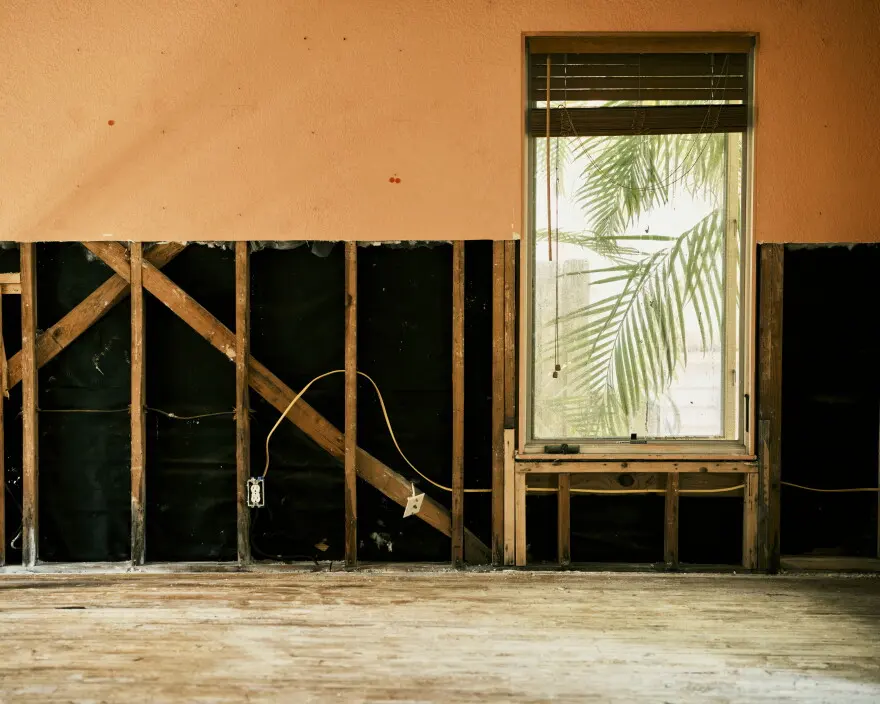
First steps for storm surge cleanup in Punta Gorda
Wait for the all clear
Stay out until Charlotte County officials say it is safe to return.
Keep the power off
Have an electrician check any panel or outlet that sat in surge water.
Mark the water line
Photograph the highest water line on every wall and door.
Call before tearing out
The moisture map and photos come before demolition for the claim file.
How the Punta Gorda team handles storm surge cleanup
After a named storm the order of work matters: documentation first, then removal of porous materials, then cleaning, then structural drying.
Moisture mapped first
The tech who does the walkthrough maps wet tile, drywall and block with pinless meters and thermal imaging before any equipment is set.
IICRC S500 drying standard
The drying team works to IICRC S500, the industry drying standard: structural drying, not just surface drying.
Claim-ready documentation
Daily moisture readings, psychrometric logs and timestamped photos go into the file an adjuster reviews.
Charlotte Harbor water experts
Surge, king tides, AC condensate overflow and slab leaks are routine losses for the Punta Gorda restoration crew.
What does storm surge cleanup cost in Punta Gorda, FL?
In Punta Gorda, FL, storm surge cleanup typically runs $6,000 to $35,000 or more for a single-story slab home. The drivers are the water height on the walls, the square footage, how much drywall, insulation, cabinetry and flooring must come out, and how long the home sat wet before work began.
Low water, one area
- A few inches over the slab
- Two-foot flood cuts
- Baseboards and pad out
Most of the floor
- Four-foot flood cuts
- Cabinets and doors removed
- Containment and antimicrobial
Deep surge, whole home
- Insulation and drywall out
- Block walls on desiccants
- About two weeks of drying
Want a closer planning number? Run the Punta Gorda water damage cost calculator. A firm figure comes from the on-site walkthrough and the moisture map.
The storm surge cleanup process, start to dry
Map
The walkthrough tech maps where the water went, room by room, under tile and inside block.
Extract
The extraction crew pulls standing water first, usually with truck-mounted units.
Dry
Air movers and LGR dehumidifiers run at the load each room needs, with readings logged daily.
Verify
Equipment leaves only when readings sit within 2 to 4 points of a dry reference material.
Punta Gorda knows hurricanes. Hurricane Charley came ashore as a Category 4 storm on August 13, 2004 and its eye crossed the city, and Hurricane Ian made its second Florida landfall near Punta Gorda on September 28, 2022. Low streets in Punta Gorda Isles, Burnt Store Isles and along the Burnt Store corridor sit only a few feet above Charlotte Harbor, so storm tides reach garages, lanais and living rooms first. In 2024, Helene and Milton pushed more Gulf water into low parts of Charlotte County.
Why surge is handled as Category 3
Surge water carries salt, silt, fuel, sewage from flooded systems and debris from the canals. IICRC S500 treats it as Category 3, so porous materials it touched come out instead of being dried: drywall and insulation up to the wicking line, carpet and pad, particleboard cabinets and most upholstered furniture. The mitigation team wears protective gear, sets containment where needed and runs HEPA air scrubbers while demolition dust is in the air.
- Flood cuts are made above the highest wicking line, often at two or four feet.
- The slab and block walls are cleaned and treated with an EPA-registered antimicrobial.
- Salt residue is washed off hard surfaces before drying starts.
Drying block walls and slab after a storm
Concrete block holds a surprising amount of water. Once the wet materials are out, the drying team sets air movers against the open walls and runs LGR dehumidifiers, adding desiccant units where block and slab readings stay high. With the power out across the county after a big storm, crews often start on generators. Daily readings show when the walls reach the drying goal, and rebuilding waits for that. The structural drying page explains the goal.
The claim file after a named storm
Surge and rising water are usually a flood claim, often under a National Flood Insurance Program policy, while wind damage and rain through a torn roof fall under a homeowners or windstorm policy. Timestamped photos of the water line, a moisture map and daily drying logs help an adjuster separate the two. Coverage depends on your policy, so it is worth checking with your own insurer. Rain driven through the roof is covered on the roof leak page.
Storm tracks and surge forecasts come from the National Hurricane Center and FloodSmart.gov.
Covered from Punta Gorda Isles to Babcock Ranch
The Punta Gorda restoration crew covers Punta Gorda Isles, Burnt Store Isles, Historic Downtown, Seminole Lakes, the Burnt Store corridor, Deep Creek, Charlotte Harbor and Port Charlotte, ZIP codes 33950, 33951, 33955, 33980, 33982 and 33983.
Every neighborhood and ZIP coveredRelated water damage services in Punta Gorda
Hurricane Storm Surge Cleanup questions in Punta Gorda, FL
Can drywall be dried after storm surge?
No. Surge is Category 3 water, so drywall and insulation it reached are removed above the wicking line. The block behind it and the framing are cleaned, treated and dried.
How high are flood cuts after surge?
Crews cut above the highest point the water wicked, which is usually a little above the visible water line. Two-foot and four-foot cuts are common because they match standard drywall sheets.
Why does surge cleanup take so long to dry?
Concrete block and slab absorb a lot of water and give it up slowly, and humid air after a storm slows evaporation. Desiccant dehumidifiers and daily readings are what bring block walls down to the drying goal.
Should I start tearing out drywall myself?
Photograph everything first, including the water line on each wall, because the claim file needs the condition before demolition. Wear protective gear if you do start; surge water carries bacteria and debris.
Is surge damage covered by homeowners insurance?
Rising water and surge usually fall under flood insurance, such as an NFIP policy, while wind and rain through the roof fall under homeowners or windstorm coverage. Coverage depends on your policy, so it is worth checking with your own insurer.
What happens to furniture and cabinets after surge?
Upholstered furniture, mattresses and particleboard cabinets that sat in surge water are usually discarded. Solid wood and metal items can often be cleaned and disinfected, and everything removed is photographed for the claim.
Surge came inside? Start the Punta Gorda cleanup.
Saltwater keeps soaking into block and slab until the wet materials come out and drying starts. The mitigation team works across Punta Gorda Isles, Burnt Store Isles, Charlotte Harbor and Port Charlotte.