Structural Drying and Dehumidification in Punta Gorda, FL
Surfaces dry first; block, framing and slab hold water long after the floor looks fine. The drying team runs air movers and dehumidifiers until readings, not the calendar, say the structure is dry.
(888) 621-2041Get the Punta Gorda drying started today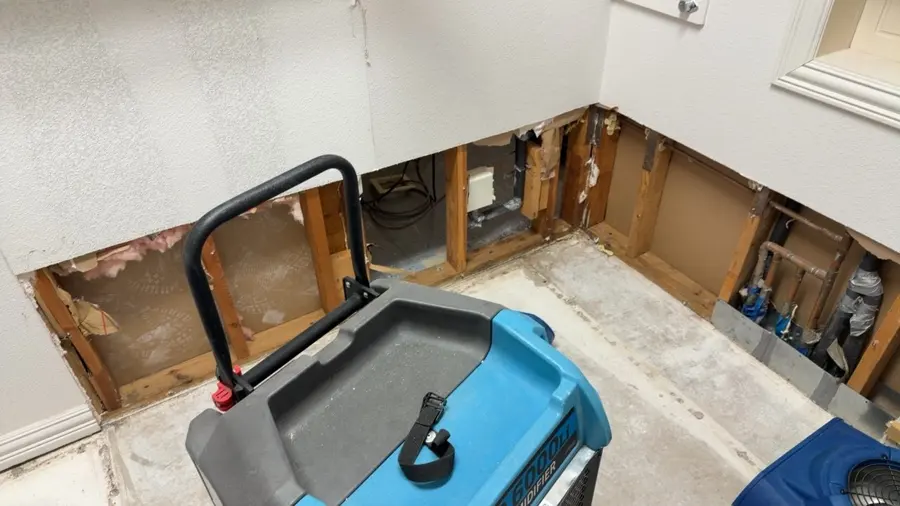
First steps for structural drying in Punta Gorda
Run the AC
If it works and is not the source of the leak, it pulls humidity down.
Keep doors to wet rooms open
Air movement helps until the drying equipment is set up.
Do not paint or patch
Sealing a wet wall traps the water inside.
Photograph, then call
Before anything is removed.
How the Punta Gorda team handles structural drying
Southwest Florida air is humid most of the year, so dehumidification carries more of the drying load here than in drier climates.
Moisture mapped first
The tech who does the walkthrough maps wet tile, drywall and block with pinless meters and thermal imaging before any equipment is set.
IICRC S500 drying standard
The drying team works to IICRC S500, the industry drying standard: structural drying, not just surface drying.
Claim-ready documentation
Daily moisture readings, psychrometric logs and timestamped photos go into the file an adjuster reviews.
Charlotte Harbor water experts
Surge, king tides, AC condensate overflow and slab leaks are routine losses for the Punta Gorda restoration crew.
What does structural drying cost in Punta Gorda, FL?
In Punta Gorda, FL, structural drying typically runs $1,500 to $9,000 on its own. The drivers are the class of loss, how many rooms need equipment, whether dense materials such as block, slab or hardwood are wet, and how many days the equipment runs.
Class 1 or 2, one area
- A few air movers
- One LGR dehumidifier
- About three days
Several rooms
- Air movers along each wet wall
- Two or more dehumidifiers
- Four to five days
Class 4, block and slab
- Desiccant dehumidifiers
- Drying mats or wall injection
- One to two weeks
Want a closer planning number? Run the Punta Gorda water damage cost calculator. A firm figure comes from the on-site walkthrough and the moisture map.
The structural drying process, start to dry
Map
The walkthrough tech maps where the water went, room by room, under tile and inside block.
Extract
The extraction crew pulls standing water first, usually with truck-mounted units.
Dry
Air movers and LGR dehumidifiers run at the load each room needs, with readings logged daily.
Verify
Equipment leaves only when readings sit within 2 to 4 points of a dry reference material.
Structural drying is the part of water damage restoration that decides whether a house is truly dry or only looks dry. In Punta Gorda homes that means concrete block exterior walls with drywall on furring strips, wood-framed interior walls, a concrete slab with tile or plank on top, and cabinets sitting on the slab. Each holds water differently, and each needs its own plan.
Classes of loss and the equipment they need
IICRC S500 sorts a loss by class. Class 1 is a small area with low-porosity materials. Class 2 is a whole room with water wicking up the walls. Class 3 has water in ceilings, walls and floors. Class 4 means bound water in dense materials like block, concrete, plaster and hardwood. The class sets how many air movers and dehumidifiers a room needs, and Class 4 usually needs desiccant dehumidifiers and more days.
- Air movers set along wet walls to speed evaporation.
- LGR dehumidifiers pull the moisture back out of the air.
- Desiccant units and drying mats for block, slab and hardwood.
The drying goal
The tech who does the walkthrough takes a reading from a dry reference material in an unaffected part of the same home. The drying team records readings on every wet material daily, along with temperature and humidity, and the equipment comes out when wet materials read within 2 to 4 points of that reference. Those psychrometric logs go into the claim file. The drying time estimator gives a typical range for your rooms.
Why humidity matters here
Outdoor humidity in Charlotte County stays high most of the year, so opening windows rarely helps a Florida dry-out and usually slows it. Closed rooms with the AC and dehumidifiers running dry faster. After a hurricane with the power out, crews run generators until service returns. For the first step on any loss, see water extraction.
Humidity control basics are on the EPA indoor air quality pages and Ready.gov.
Covered from Punta Gorda Isles to Babcock Ranch
The Punta Gorda restoration crew covers Punta Gorda Isles, Burnt Store Isles, Historic Downtown, Seminole Lakes, the Burnt Store corridor, Deep Creek, Charlotte Harbor and Port Charlotte, ZIP codes 33950, 33951, 33955, 33980, 33982 and 33983.
Every neighborhood and ZIP coveredRelated water damage services in Punta Gorda
Structural Drying and Dehumidification questions in Punta Gorda, FL
Why keep drying when the floor already looks dry?
Surfaces dry first. Water stays inside drywall, block, cabinets and slab, and the IICRC S500 goal is met only when readings sit within 2 to 4 points of a dry reference material in the same home.
Should I open the windows to help it dry?
In Punta Gorda, usually not. Outdoor air is humid most of the year and slows drying. Closed rooms with the AC and dehumidifiers running dry faster.
What is an LGR dehumidifier?
A low grain refrigerant dehumidifier pulls more water out of the air than a household unit, even when the air is already fairly dry. It does most of the work on a typical dry-out.
When is a desiccant dehumidifier used?
On Class 4 losses with dense materials like concrete block, slab, plaster and hardwood, and in cooler or already-dry air where refrigerant units slow down.
How often are readings taken?
Most crews take and log readings daily on every wet material, with temperature and humidity. Equipment is moved or removed as rooms reach the goal.
Is the equipment noisy?
Air movers and dehumidifiers run day and night and make steady fan noise. Most homeowners stay in the home during a contained dry-out.
Still damp after a leak? Dry it to a reading.
Walls and slab that look dry can still hold water for weeks. The drying team works across Punta Gorda, Babcock Ranch, Deep Creek and Port Charlotte.